


Reflections from the Book of Exodus
Exodus is one of those books that doesn’t get a lot of airtime in churches; the passages that do are the stories of Moses’ birth, his escape, the plagues, Passover, crossing the Red Sea, and the golden calf. That already seems a lot, and plenty of preachers stick to this. There is a wealth of excellent teaching within these amazing stories. But there is so much more.
Recently, I have been reading through Exodus as part of my personal devotion. What I have discovered this time has revealed a new level of understanding about scripture and how God has given clues about Jesus and what God the Father would do in the future, through Him.
In Exodus, God gives exact details in His blueprint for the Tabernacle (Ch 25-28) and then Moses recounts the construction in equal detail. (Ch36-39). This is no simple repetition. God wants us to understand the significance of the Tabernacle and see the imagery contained within it.
Here are a few examples to whet your appetite and encourage you to read and research it yourself. There is so much more than I can share with you here in this short post.
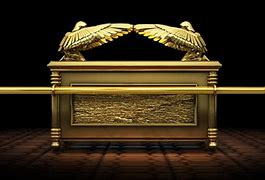
The Ark and The Mercy Seat: (25:10-22)
The Ark is made of Acacia wood and overlaid in pure gold; It contained the tablets of God’s law that Moses brought down from Mt Sinai. In ancient times wood was a symbol of humanity. Gold is a picture of divinity, of God. What we have here is a picture of Jesus. God in human form. The person of Jesus who lived God’s law perfectly, as it was always within Him. The hypostatic union of the person of Jesus is pictured by the Ark. Not only this but the sap of Acacia wood was used in ancient times to bring healing to wounds and prevent infection. What a beautiful picture of the blood of Christ being shed to bring healing to humanity.
The lid of the Ark, sometimes called the mercy seat or atonement cover is also symbolic of Jesus. The Hebrew words translated “atonement cover” perfectly describe the role of Jesus at His death. Jesus atones for and covers our sin of not fulfilling God’s law. In Bible times a person could seek sanctuary at the “mercy seat.” They were able to find refuge from judgement and obtain mercy. In Exodus 20:22, God says that the atonement cover is the place where He will meet with Moses. Interestingly, it is through atonement and mercy that God is met, not through the Law! Isn’t this what we do when we come to the cross? We recognise this is where we can gain forgiveness, escape God’s wrath and receive His mercy, not through trying to please him by good works. The law only reveals our weakness. It cannot save us.
Scholars have argued over the role of the cherubim on top of the Ark. Some suggest they stand in judgment, ready to pounce on those who break the Law. Others say that they look down on the Mercy Seat, restrained from judgment because of the blood of the sacrifices offered for atonement. Still more say that they guard the way to God, as the cherubim guarded the Tree of Life in the Garden of Eden. My favourite is that they picture judgment being restrained because of God’s mercy. When Christ died on the cross, he bore the punishment for all our sins. God’s wrath and judgment were poured out on Him and not us. We received mercy at the expense of Christ. God’s judgment on us is restrained because of Christ.
The table: (25:23-30)
Once again, we see the combination of wood and gold, and humanity and divinity meet. The table was used to hold the bread of the presence, a symbolic image of fellowship and sharing food together. God was going to dwell amongst (tabernacle) His people. Sharing food is a sign of an intimate relationship. Here at the table God and humanity meet in a relationship. It doesn’t take much imagination to make the leap to the communion table, where as Christians, we meet with God through bread and wine. Ch 20:29-30 talks about offerings being poured out. The table was a place where the Hebrews were reminded of the need for offerings to God as an act of devotion. At the communion table, we are reminded of Jesus’ offering; the body broken on the cross and the blood poured out. For many Christians, Communion is an intimate time with God, a time where spiritual refreshment is received with thanks because of Jesus’ sacrifice.
The Lampstand: (25:31-40)
Notice that the lampstand is pure gold, a picture of divinity and purity. Its purpose was to give the only light in the tent, as there were no windows. However, there is more to it than just light.
It was a central stand with six branches, three on either side, with almond buds embedded in them. Almond was a springtime blossom and an image of new life.
The lampstand was the shape of a tree. In the Garden of Eden there were two trees, the Tree of Knowledge of Good and Evil and the Tree of Life (Genesis 2:9). The Lampstand (Menorah) is a picture of the Tree of Life. When Adam and Eve sinned, they were separated from the Tree of Life. But God did not abandon them, he had a plan to restore humanity, to reconcile them to Him through His Son Jesus. New life in Christ is like the budding of the almonds that blossom in spring.
The lampstand reminded people that it is God who gives life and light to all Mankind. It is also a picture of Jesus, who is the Light of the World and the giver of eternal life. He would be the one to bring light to the Jews and all humanity!
“I am the light of the world. Whoever follows me will never walk in darkness but will have the light of life.” (John 8:12, NIV)
The oil for the lamp: 27:20
Oil of course is a picture of the Holy Spirit. Jesus was filled with the Holy Spirit at His baptism, and it remained with Him. The lamp was constantly burning, the oil being replenished by the priests every day. We too, if we are Christian are filled with the Holy Spirit, but unlike Jesus, we need a replenishing daily!
The curtains: 26:1-36
The material used to make the curtains, that separated the Ark from the rest of the courtyard was skilfully made. Exodus 26:1 “Make the tabernacle with ten curtains of finely twisted linen and blue, purple and scarlet yarn, with cherubim woven into them by a skilled worker”. These were beautifully sewn and woven pieces of art and craft. The colours are significant. Blue purple and scarlet were thought to be royal colours, representing the kingly nature of God Himself. However, there seems to be an even more curious and significant pointer to Jesus. Those three colours are the colours of blood. The purple and red are similar to oxygenated and unoxygenated blood and the blue is what we often see as our veins. This is another picture of Christ’s humanity. The God at the centre, hidden away with the perfect law concealed within, wrapped in flesh as a human.
Note verse 7 “Make curtains of goat hair for the tent over the tabernacle…” and v14 “Make for the tent a covering of ram skins dyed red, and over that a covering of the other durable leather…” This beautiful picture of the divine Christ, His flesh, the red, purple and blue finely twisted linen is covered by animal skins and waterproof leather. It is hidden. Only when you enter the courtyard do you begin to see the beauty. From the outside, it looks like any other tent! What a picture of the divinity and humanity of Christ. On the outside, He was totally human, just like the rest of us. But on the inside, beautiful, divine.
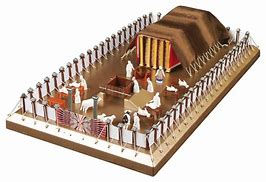
The wider courtyard (27:9-19)
This too had an outer covering that was plain goatskin and leather. There was only one entrance to the courtyard, through a curtain. This curtain was not covered with the same goat hair, but the same finely twisted, blue, purple and red yarn. It was through this entrance that people came into the presence of God. What a fantastic picture of Christ. The only way to God is through the body of Christ. Jesus said in John 14:6 I am the way and the truth and the life. No one comes to the Father except through me.
The people had no choice but to enter through the curtain. There was no other way in!
The Altar of Burnt Offering: (27:1-8)
Once again, the altar is made of acacia wood overlayed with gold. The symbolism is clear. The ultimate altar is Christ Himself offering His body as a sacrifice for sin It was here at the altar that sacrifices were made for the forgiveness of sin. People offered their sacrifices and then could be closer to the presence of God.
In the New Testament, when Christ died the curtain in the temple was ripped from top to bottom, signifying the barrier between the holy God and the sinful people was no longer there. God and mankind could be reconciled. The Hebrews had to sacrifice daily to atone for their sin, but Christ was and is the final once for all time sacrifice. Faith in Him is all that we need.
The wash basin: (30:17-21)
This basin was made of bronze, the traditional material of judgment. But here the priests use it to wash after sacrificing the animals. Sacrifice was bloody. Some of the blood was sprinkled on the altar, the rest was burned and then the priests cleaned themselves up in the washbasin.
This is a wonderful foreshadowing of what happens to us when we accept Jesus’ sacrifice for our sins. We are spared judgment and washed by His blood. We are made clean.
Reflect with me, on the journey of Hebrew worship in the Tabernacle. The people are on the outside, they enter through the only way in, passing through the blue, scarlet and red curtain. They approach the altar, make a sacrifice, blood is spilt, the basin cleanses and then you can share fellowship with God symbolised by the table of the bread of the presence in the light of God’s glory, symbolised by the lampstand. No Hebrew could of course enter the Tabernacle itself and approach the Ark. That was where the Glory of God was resting. It would overwhelm them.
This was a perfect picture of what Christ would later do. We approach Christ at the cross, we acknowledge His sacrifice for us. We are washed by the spilling of His blood and our sin is forgiven. We are then able to approach God and have fellowship with him, through Holy Communion, worship and prayer. We can approach the Throne of God (The Ark) because the curtain has been removed and God is dwelling with His people. We can seek mercy because Christ has removed our sins.
I will finish by saying that The Tabernacle was the place where God dwelt with His people. The glory of the Lord rested over the Ark and His invisible presence was visible in the form of a cloud and pillar of fire. When Jesus was born, he was called “Emmanuel” – God with us. God came to tabernacle with His people, in human form, to rescue them from sin.
As Christians, the Holy Spirit tabernacles with us too. We have fellowship with God the Father, through Jesus the Son by the power of the Holy Spirit.
I hope that this has inspired you to go back and read Exodus again. Look out for Jesus. The is there hidden in plain sight. Explore the way the priestly garments are designed and spot Him there too.
Thanks for reading.
Jez Taylor


 Jez Taylor- Author with a Christian worldview
Leave a reply to Jesus in the Tabernacle – Joseph R. Mason Cancel reply